




MUSCAT, AUGUST 16
Omani upstream energy company ARA Petroleum is exploring the potential to produce biofuel and biohydrogen by converting large volumes of oilfield produced water from its operations into useful resources, as part of efforts to advance its decarbonisation and circular-economy ambitions.
The Muscat-headquartered company, part of The Zubair Corporation portfolio, outlined the initiatives in its newly published 2025 Sustainability Report, highlighting produced water as both a growing operational challenge and a potential resource for low-carbon energy production.
ARA said produced water intensity across its operations increased sharply in 2025, rising from 0.19 cubic metres per barrel of oil equivalent (m³/boe) in 2024 to 0.30 m³/boe — a 60.2 per cent increase. The rise was attributed primarily to a substantial increase in water production from its Block 44 and Block 31 operations, coupled with a modest increase in overall hydrocarbon production.
ARA is the sole operator of Blocks 44 and 31, which comprise three fields and 16 wells and currently produce more than 0.6 million barrels of oil equivalent per day, according to the report.
“A key challenge lies in the high salinity of our produced water, which makes treatment and reuse technically complex and resource-intensive”, ARA said, adding that it is investing in research and development to better understand the challenges and identify innovative and sustainable treatment solutions.
One potential application under consideration is the cultivation of Camelina sativa, an oilseed crop that could provide a feedstock for biofuel production while simultaneously helping to manage produced water.
Under the proposed biofuel project, ARA plans to dedicate land within an oilfield environment to Camelina cultivation, with appropriately treated produced water reused for irrigation. The company said Camelina's tolerance of salinity, limited water availability and arid and semi-arid conditions makes it potentially suitable for cultivation in Oman, while its high oil content offers a feedstock for biofuel production.
ARA envisages a nature-based, closed-loop system combining soil amendments, treated-water reuse and low-input cultivation to convert oilfield by-products into productive resources. At scale, Camelina cultivation could also help manage produced water and brine while reducing environmental impacts and supporting regulatory compliance.
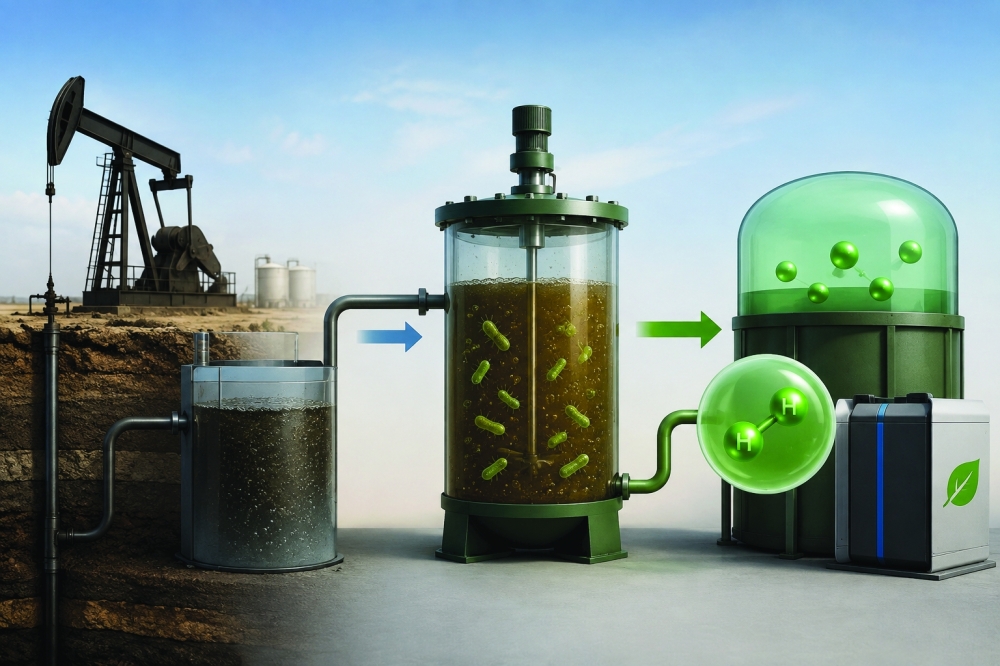
A second initiative focuses on biohydrogen, using produced water as the basis for an integrated biological process designed to generate hydrogen alongside other value-added products.
The proposed system would begin with an assessment of produced water to determine its suitability for treatment, followed by dark fermentation to generate initial hydrogen and intermediates. Photo-fermentation would then be used to enhance hydrogen production.
The process would also incorporate biochar production from sludge, potentially providing a route for carbon capture and additional value creation. Treated water could subsequently be reused for agricultural purposes, creating a closed-loop system linking waste management, clean-energy production and water reuse.
ARA said the biohydrogen concept could provide a scalable and potentially economically viable pathway for converting oilfield waste streams into clean energy, usable water and value-added by-products, while supporting the company's broader transition towards lower-carbon and more resource-efficient upstream operations.
Oman Observer is now on the WhatsApp channel. Click here